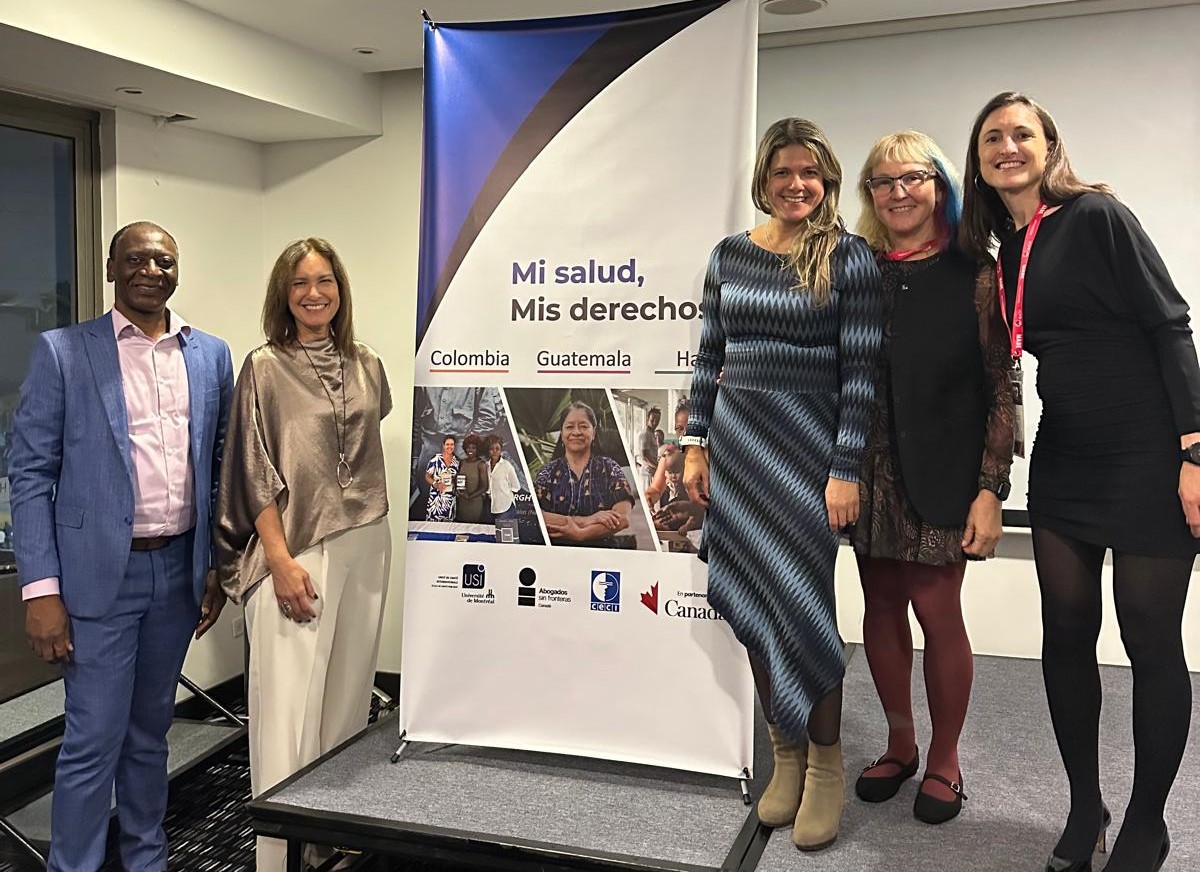
 Launch of the regional project in Colombia. From left to right: Chrisny Félix, Health Coordinator Haiti; Karina Dubois-Nguyen, Director (USI); Islene Lazo, Senior Coordinator (USI); Brigitte Cotte, Public Health Physician; Marie Dorey, Master’s student in Public Health at ESPUN and Intern (USI). Credit: USI.
Article written by UdeM Nouvelles.
In a global context where inequalities in sexual and reproductive health persist, a Quebec-based consortium made up of the University of Montreal’s International Health Unit (USI), Lawyers Without Borders Canada (LWBC), and the Centre d’étude et de coopération internationale (CECI) has received $30 million from the Government of Canada to implement the project “Ma santé, mes droits / Sante Mwen, Dwa Mwen / Mi Salud, Mis Derechos”, a seven-year initiative that will extend until 2032.
The project aims to build resilience, equity, and gender-responsive within health systems in Haiti, Colombia, and Guatemala, while putting women and girls at the center of change.
An initiative rooted in a shared vision
The project “Ma santé, mes droits/ Sante Mwen, Dwa Mwen / Mi Salud, Mis Derechos” aligns with Canada’s Decentralized Policy on Engagement for Sexual and Reproductive Health and Rights, which aims to close persistent gaps in access to quality care for women, adolescents, and the most marginalized children.
"We aim to improve the health of the most vulnerable populations. The Canadian call for proposals focused on neglected areas of sexual and reproductive health and rights: family planning, gender-based violence, safe abortion care, comprehensive sexual education, etc. These are areas where our collective expertise can really make a difference," explains Karina Dubois-Nguyen, Director of USI.
This collaboration between USI, LWBC, and CECI is no coincidence. The partners have long-standing relationships and extensive experience working in multiple low- and middle-income countries.
"We are three organizations recognized for our complementary expertise," notes Claude Phanord, CECI Director for Haiti. "The University of Montreal focuses on strengthening health services, our organization on community mobilization, and Lawyers Without Borders on the legal aspect. Together, we cover the full spectrum—from access to care to the defense of rights."
Three countries, one shared pursuit of equity
The choice of Haiti, Colombia, and Guatemala is deliberate.
"Haiti was, in our view, non-negotiable," says Karina Dubois-Nguyen. "We have been working there for over 35 years with strong partners and tangible results. Guatemala offers an opportunity to collaborate and learn from Indigenous communities to strengthen and make health services more inclusive. In Colombia, we can draw inspiration from its legal advances in abortion and reproductive justice."
For Stelsie Angers, Director of LWBC for Colombia, this regional approach also fosters mutual learning:
"Each country has its challenges, but also inspiring experiences to share. Colombia, for example, has made significant progress on reproductive rights. Guatemala is working on recognizing traditional knowledge. This project will allow sharing of best practices and create synergies across the three contexts."
This interconnected approach lies at the heart of the project’s philosophy. Building on already established networks, the partners aim to create bridges between public institutions, universities, civil society organizations, and local communities. Major obstacles, multi-sectoral responses In the three target countries, barriers to sexual and reproductive health are numerous and intertwined. Poverty, insecurity, sociocultural taboos, weak infrastructure, and a shortage of trained health personnel continue to deny thousands of women and girls their fundamental rights.
"We face significant geographic and economic barriers," notes Karina Dubois-Nguyen. "In some areas, services simply do not exist. We need to innovate through mobile clinics, telemedicine, and community-based approaches tailored to local realities."
But the obstacles are not only material. "In many communities, talking about family planning or sexuality remains taboo," adds Claude Phanord. "There is a huge information gap. Part of our work involves breaking these silences. All this occurs as the health system deteriorates, with a severe lack of support for displaced migrant communities—many of them pregnant women—at the border with the Dominican Republic."
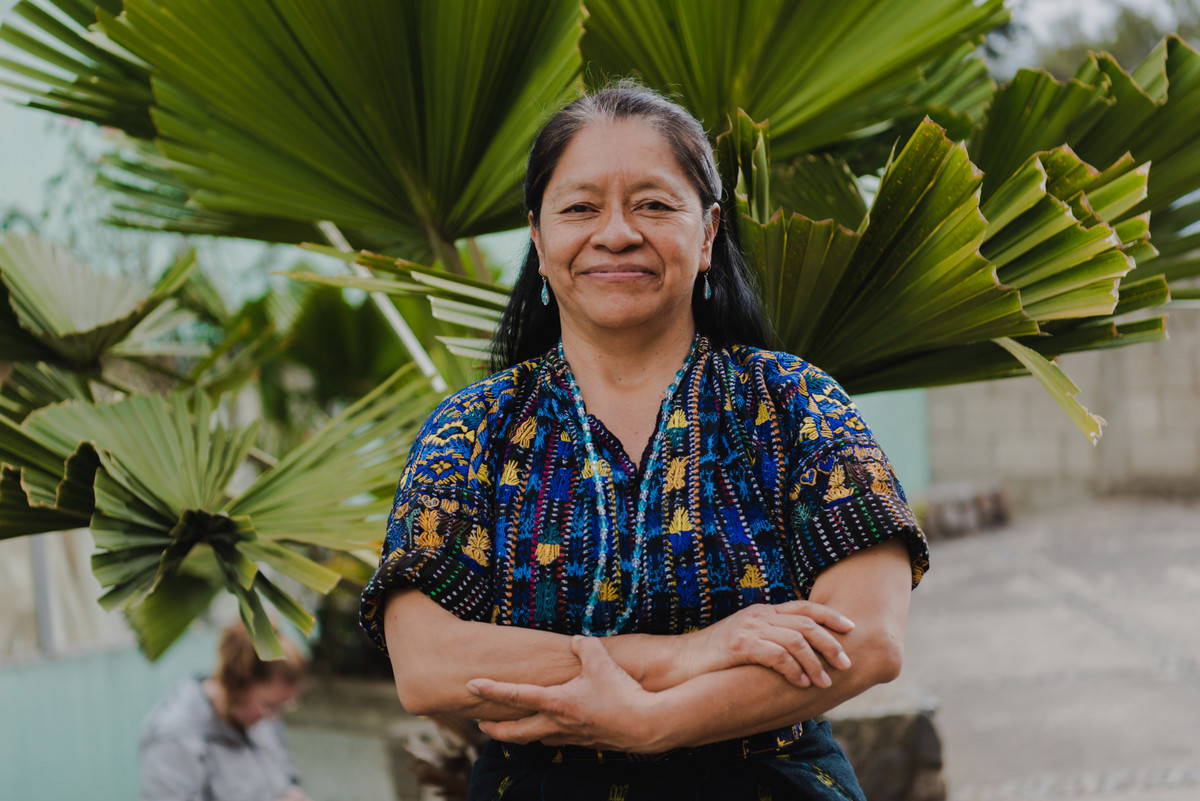
Credit : CECI.
On the legal front, challenges are equally significant.
"In many cases, laws exist but are not enforced," laments Stelsie Angers. "Through the project, we will work both on training justice actors and modernizing regulatory frameworks. We want sexual and reproductive rights to move from theory to reality."
To achieve this, the creators of “Ma santé, mes droits / Sante Mwen, Dwa Mwen / Mi Salud, Mis Derechos” adopt a multi-sectoral approach. Among other actions, they plan to strengthen community health services, provide training for health personnel, conduct community awareness campaigns on reproductive health and violence prevention, create women’s committees to serve as links between communities and organizations, and provide legal support for victims of gender-based violence.
For the consortium, the project’s success relies primarily on collaboration between local and national levels and on recognizing the knowledge of the communities themselves.
"We do not impose models from elsewhere," insists Karina Dubois-Nguyen. "In collaboration with public organizations, we aim to value local knowledge and work alongside parteras, comadronas, and matrons. They are the ones whom women in their communities trust."
A commitment to equality and dignity
The project “Ma santé, mes droits/ Sante Mwen, Dwa Mwen / Mi Salud, Mis Derechos” carries a deeply human ambition: making sexual and reproductive health accessible, safe, and rights-respecting for all. Fundamentally, it seeks to ensure that every woman and adolescent in these three countries can freely control her body and future. By bringing together health, justice, and civil society, the project aims to build more just, inclusive, and resilient systems. Through international cooperation, it underscores that sexual and reproductive rights are often neglected but remain central to gender equality.
"What we aim for," concludes Karina Dubois-Nguyen, "is to advance toward genuine social transformation—a society where women, adolescents, and children can fully exercise their rights.